Extra Serving🎧 Listen
Is Domino’s new pizza as iconic as the Big Mac?
Domino's introduced a Detroit-style pizza offering while Popeyes reintroduced a $6 Big Box promotion, amid signs that fast-food consumers' perception of value is eroding.
123 stories · last 30 days by relevance
Domino's introduced a Detroit-style pizza offering while Popeyes reintroduced a $6 Big Box promotion, amid signs that fast-food consumers' perception of value is eroding.
Dining behavior data from Zest shows that frequency and habit drive restaurant choices more than active deliberation, suggesting operators should focus on building repeat visits over one-time attracti
Research indicates that expanding restaurant chains demonstrate stronger digital visibility across search, reviews, social platforms, and AI compared to contracting chains, suggesting that growth and

Bundles serve as a value-communication tool for restaurants without explicit discounting, but their effectiveness appears to vary by daypart—suggesting operators may need distinct bundling strategies
Restaurant operators can use data and AI to gain visibility across multi-unit systems while preserving human judgment in decision-making, suggesting that technology works best as a complement to opera

Loyalty program fraud is now a material threat to chain revenue and customer data; credential stuffing and weak authentication are evolving attack vectors brands must defend.

A CEO reports that consumers are expressing dissatisfaction with fast-food pricing, signaling potential pressure on chains to reconsider their pricing strategies.
Papa John's brand perception index has improved year-over-year, but the chain still trails competitors in value and customer satisfaction measures.

Wendy's is undergoing executive changes, Taco Bell partnered with Olivia Rodrigo, and recent sales data showed gains for independent restaurants—signaling continued industry consolidation pressures an
McDonald's loyalty program collects granular customer data including visit frequency predictions and churn scores, illustrating how QSR operators now build detailed behavioral profiles that extend wel

Analysis of 93 million data points reveals that bulk purchasing doesn't consistently deliver lower unit costs across restaurants buying identical products from the same suppliers—challenging a widespr

The National Restaurant Association noted that beverages can support sales across different dayparts for restaurant brands.
Industry experts debate whether recent moves at Wendy's and Pizza Hut will improve performance, while data indicates independent restaurants are gaining ground relative to chains.
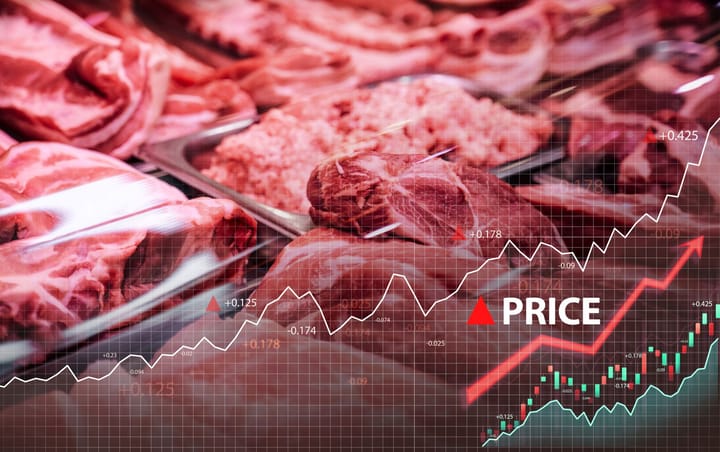
Beef prices have risen 25% since 2023, driving higher consumer spending despite fewer eating occasions—signaling margin pressure on operators reliant on beef-heavy menus.
A PAR survey found that three-quarters of diners are open to AI use in restaurants, suggesting operators are unlikely to face widespread consumer resistance to automation adoption.
Bank of America data shows bars and independent restaurants are outperforming chains, while consumers are shifting spending from grocers to restaurants.
Restaurant operators are prioritizing expansion strategies rather than scaling back operations in 2026.
Restaurant brands are increasingly using AI and location data to refine site selection, marketing, and loyalty programs, reflecting broader shifts in how operators approach foot-traffic strategy in a
A Toast survey shows fast casual operators remain growth-focused despite cost and labor headwinds, signaling confidence in the segment's resilience amid near-term operational pressures.

Long John Silver's is rolling out a fall menu emphasizing comfort items and value pricing while pursuing expansion under new ownership, suggesting a focus on traffic-driving promotions alongside physi
McDonald's has consolidated data from nearly 220 million loyalty program members as part of a broader artificial intelligence strategy, signaling the chain's intent to leverage unified customer insigh
New research shows GLP-1 adoption is dynamic and varies significantly by restaurant, with men representing an underappreciated user segment—signaling that chains may need to recalibrate their assumpti

A PAR e-book reports that roughly one-third of restaurant operators are using AI as an analytical tool rather than just for reporting, suggesting a shift toward more interactive data exploration in re
Restaurant chains are increasingly using microtargeting—leveraging loyalty data and customer behavior to deliver personalized ads—with Red Robin cited as an example of the approach's effectiveness in
Family-dining chains face headwinds as consumers increasingly opt for specialized dining concepts instead of traditional multi-category venues.

Consumers now evaluate restaurants against a broader competitive set including grocers and convenience stores, choosing based on specific meal needs rather than dining category alone.
Consumers are evaluating food choices across multiple criteria—mood, budget, time, and trust—suggesting operators need to address these layered priorities simultaneously to remain relevant.
Restaurant traffic declined in 2026 as inflation drove consumers toward deal-oriented channels like grocery and warehouse clubs, signaling operators should anticipate continued price sensitivity in 20
Restaurant traffic has recovered following a Cyclospora outbreak.

Bank of America credit-card data shows younger and lower-income consumers are increasing restaurant spending, with independent restaurants capturing more of that growth than chains.
A joint DoorDash and SevenRooms industry report suggests that while restaurants invest significantly in visibility, converting discovered diners depends on what happens in the moments they first engag
Restaurant operators face cost pressures from food and labor inflation while managing food safety concerns and adapting to shifting diner behavior linked to GLP-1 medication use, creating a complex op
Planned 2026 restaurant openings span a mix of formats—from compact quick-service to casual and upscale—contradicting the prevailing narrative that smaller footprints and reduced dine-in capacity defi
Most full-service restaurant groups pursue growth through unit expansion or price increases, but a third revenue lever exists that operators commonly overlook.
New research indicates GLP-1 adoption patterns are more dynamic and demographically varied than commonly assumed, with men underrepresented in typical characterizations and restaurant-level usage diff

Loyalty programs are increasingly serving as data collection tools rather than purely transactional offers, enabling restaurants to build first-party customer insights.
Coffee concepts are gaining share while pizza concepts face headwinds, and some established QSR chains are undergoing turnarounds, according to Restaurant Dive's Q2 2026 analysis.
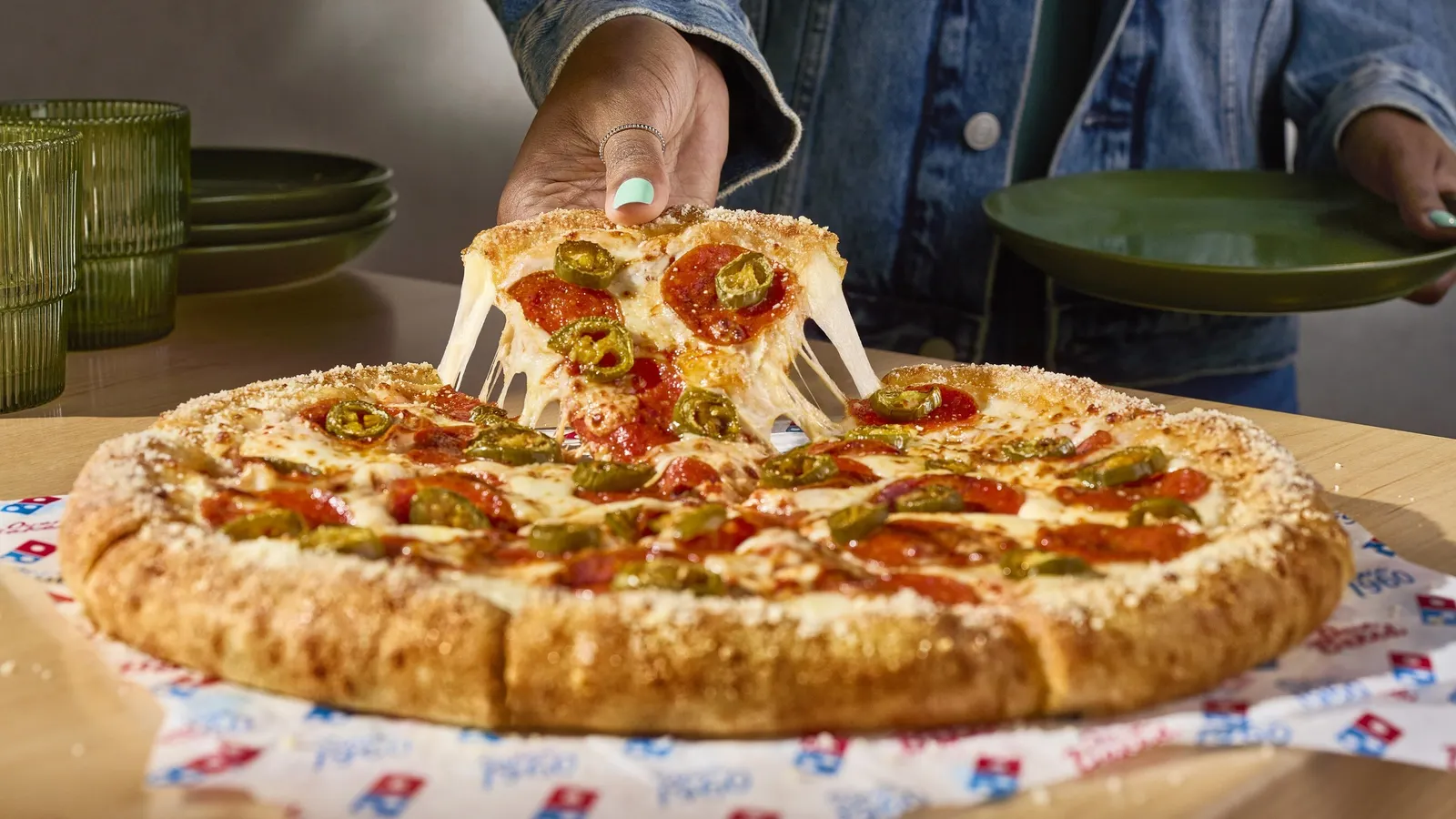
UBS predicts US restaurant traffic will stabilize in the second half of the year following weak first-half performance, suggesting operators may see relief from consumer spending pressures.
A National Restaurant Association report finds that Gen Z and millennials are driving beverage-only restaurant visits, with demand for coffee variety high but interest in dirty sodas low, though such
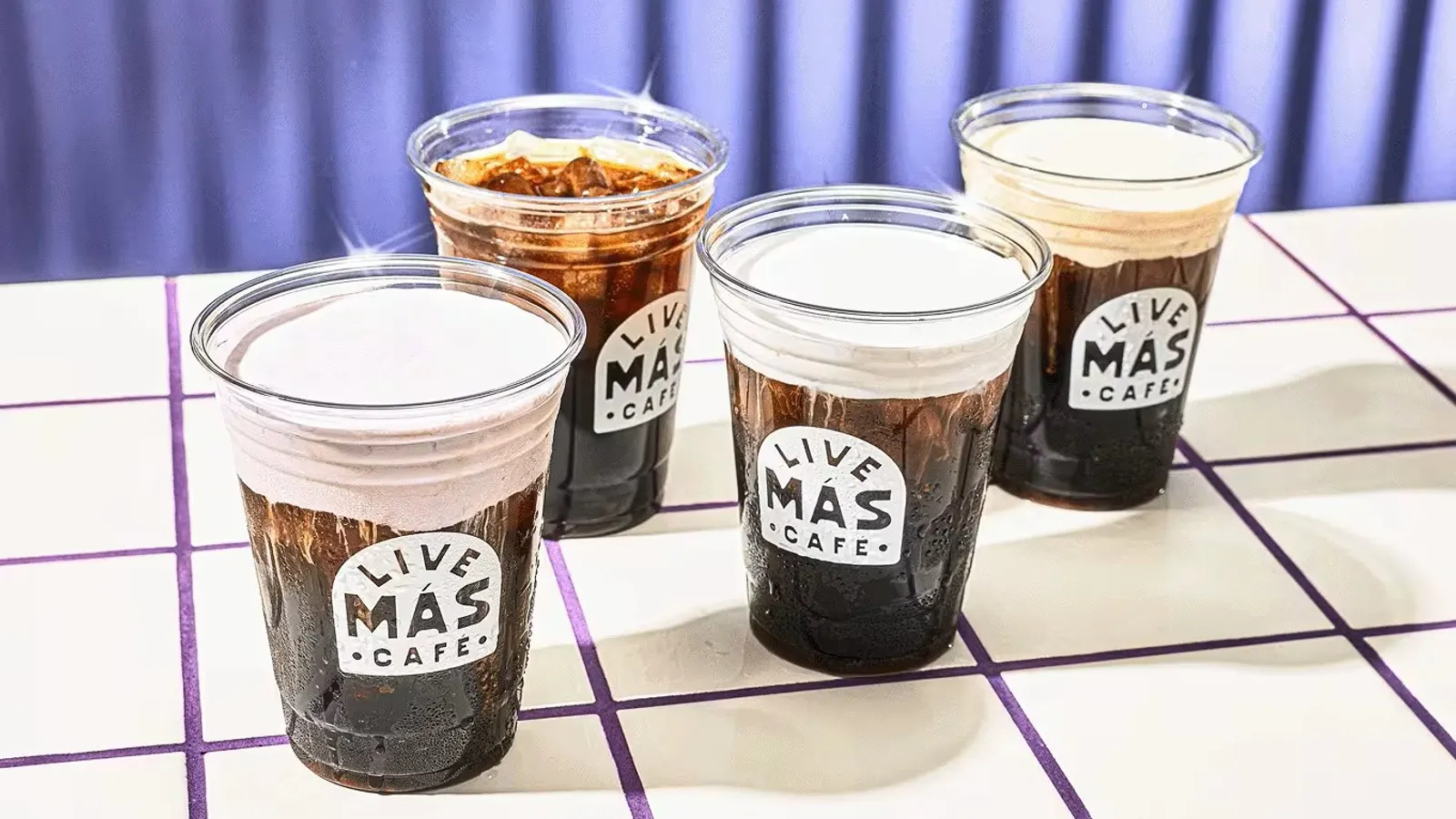
PAR Technology released a 2026 report surveying 1,000 consumers on AI adoption in restaurants, signaling growing focus on consumer-facing AI applications in the industry.

Restaurants are adjusting menu and service offerings—portion sizes, portability, and pricing—to accommodate diners' shifting daily patterns and preferences.
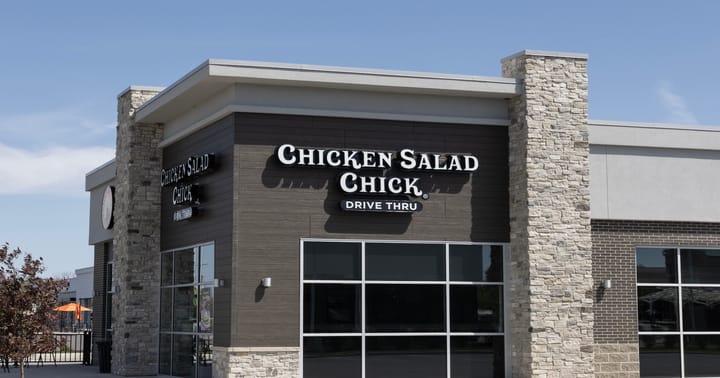
Chicken Salad Chick ranked at the top of YouGov's study of emerging restaurant brands, which evaluated chains using key performance metrics.
US restaurant sales increased despite fewer dine-in visits, suggesting operators shifted successfully toward off-premise channels or adjusted their business models.
In-N-Out operates 431 restaurants and reportedly generates revenue comparable to much larger chains, suggesting operational efficiency and brand loyalty may enable smaller restaurant networks to achie
Fast-food chains including Wendy's are experiencing slower growth compared to casual-dining competitors, suggesting a potential shift in consumer spending patterns away from quick-service toward sit-d
The U.S. coffee shop market reached $58.5 billion annually with 6.6% year-over-year growth, signaling robust demand for coffee programs, though restaurant operators face margin pressures that merit at
McDonald's collected a 515-page dossier on a customer, suggesting the chain conducts extensive data profiling on individuals—a practice that signals how deeply restaurant operators now track customer
Wendy's promoted a new CMO, Pizza Hut separated from Yum Brands, and independent restaurants have seen sales growth, according to a debate between industry analysts.
US fast-food traffic declined in July, with chicken and pizza concepts showing particular weakness.
A restaurant's reservation system captures customer data from busy service nights, creating a record of guest information.