Taco Bell revs up drive-thru AI deployment
Taco Bell is expanding AI-powered voice ordering in its drive-thrus through a partnership with Omilia, which already operates in nearly 900 U.S. restaurants, signaling continued industry momentum towa

77 stories · last 30 days by relevance
Taco Bell is expanding AI-powered voice ordering in its drive-thrus through a partnership with Omilia, which already operates in nearly 900 U.S. restaurants, signaling continued industry momentum towa

Audivi AI has released a new pricing model designed to make drive-thru automation more accessible to quick-service restaurant operators.
Wendy's is investing in digital sales, AI-powered ordering, and menu innovation to address weak customer traffic.
Eric Knott, who scaled PDQ as COO before becoming CEO of Kansas City-based Tiki Taco, joined Restaurant Tech Trends to discuss growth discipline learned from both successes and failures.
Quick-service restaurants are receiving a higher share of citations in AI search results compared to fast-casual chains.
Labor scheduling is moving to AI — the trade headline signals cost pressure and tech adoption spreading across QSR.
Restaurant operators are adopting voice AI technology to capture phone call data as a way to recognize and engage customers across locations, suggesting the phone channel may become a key loyalty and

Restaurant technology adoption remains a critical challenge; even sophisticated software fails to deliver value without consistent team engagement, according to a discussion with Decision Logic's CEO
SoundHound AI is introducing voice and agentic AI capabilities for restaurant ordering, drive-thru, and guest service operations, signaling that voice technology is transitioning from experimental to
MarginEdge added real-time cost management, AI forecasting, and back-office automation capabilities to its platform.
Skyline Essentials launched SkAI, an AI forecasting platform designed to help independent and multi-unit restaurant operators predict revenue and labor costs—capabilities historically available mainly

MashMore Potato introduced an AI operating system it says is reducing management workload at its Albany location; the company frames this as a step toward making its model more scalable and software-d
Chipotle's COO discussed the chain's technology investments in back-of-house operations as part of its strategy to attract and retain younger diners.

McDonald's is testing an AI-powered drive-thru system developed with Google, signaling a push toward automation in order-taking.
Yelp is integrating AI-powered guest management tools into its restaurant platform, connecting discovery and operations workflows; this suggests a shift toward consolidating reservation, waitlist, and
Chuck E. Cheese's new CEO is pursuing global expansion through subscription models, AI parent tools, and a shift toward active-play formats, signaling confidence in the chain's financial position to f

DoorDash has introduced AI features allowing customers to order food and book reservations using photos and prompts, signaling the company's strategy to reduce friction in the discovery-to-ordering jo
McDonald's is deploying AI to handle drive-thru orders, signaling a shift toward automation in a labor-intensive channel where accuracy and speed have long been operational pain points.
Dishio, an AI platform for restaurants, reached 350 customers in its first year by helping operators consolidate guest data and boost retention.
Miso Robotics, known for its burger-cooking robot Flippy, has acquired pizza automation intellectual property from Zume.

A restaurant AI executive contends that the most valuable AI applications are unglamorous operational tools—faster lines, accurate orders, ready food—rather than headline-grabbing conversational AI li
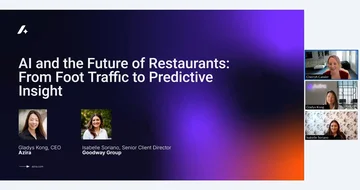
A webinar discusses how AI and location intelligence tools are reshaping restaurant site selection strategies beyond traditional methods.

A report indicates quick-service restaurants are receiving higher citation shares than fast-casual chains in AI search results.
Toast announced updates to its POS platform including AI and guest engagement capabilities, signaling the consolidation of restaurant operations into integrated software suites.
DoorDash is testing AI-powered ordering capabilities and expanding street safety initiatives as part of a broader business model expansion.
A new playbook argues that reducing friction in ordering and payment systems through unified platforms and self-service technology can improve throughput in QSR operations.

Fully automated drive-thru eliminates 20–30% labor burden and fits into 240 sq ft footprint, signaling how automation reshapes site selection and unit economics in QSR.
Nory has launched agentic AI tools aimed at restaurant forecasting, labor scheduling, inventory management, and profitability tracking.
Miso Robotics acquired Zume Pizza's technology and intellectual property to broaden its restaurant automation offerings.
Miso Robotics acquired technology and intellectual property from Zume Pizza, signaling consolidation among automation vendors serving the restaurant industry.
ChatGPT ordering on Grubhub signals how delivery platforms are embedding AI to reduce friction and capture higher order frequency.

Loyalty and first-party data ownership are critical defensibility against third-party marketplace sprawl and emerging AI ordering agents — Thanx CEO discusses the data and AI bets operators must make
Starbucks and Little Caesars have integrated with ChatGPT to enable ordering directly within the AI assistant, signaling growing restaurant interest in embedding commerce into AI platforms.
Embark Marketing is advising restaurants to reconsider their Yelp approach as artificial intelligence search tools change how diners discover restaurants.
A free webinar is being offered to teach restaurant operators how to use AI for personalizing customer offers.

A white paper argues AI can help restaurants capitalize on delivery demand surges during major events like the 2026 World Cup by optimizing orders, menus, and operations.

Emerging fast-casual brand shares playbook on scaling from 15 to multi-state franchising while leveraging catering as outsized revenue channel and placing strategic AI bets.
SoundHound reports its drive-thru AI is generating return on investment, raising the question of whether the technology can be deployed across the restaurant industry at scale.
QSR Magazine questions whether AI ordering systems are delivering meaningful value to restaurants or mostly generating industry buzz.
AI-powered recipe and culinary operating system — back-office recipe scaling and sourcing automation relevant to chains standardizing menus across units.
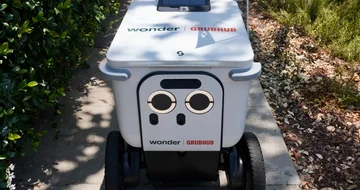
Wonder is using burrito bowl preparation as a test case for deploying robotic kitchen automation in restaurants.
Rush Bowls founder Andrew Pudalov transitioned from 15 years in derivatives trading at Morgan Stanley to launch a 400-square-foot bowl concept, signaling continued crossover between Wall Street talent
Dishio, a restaurant AI platform, has publicly launched after a year in stealth with 350+ restaurants using its technology, combining its own platform with Dineline's growth services.
Bear Robotics acquired Kinisi Robotics to expand its robot offerings beyond its existing food-service lineup.
Fast-growing bakery café CMO outlines playbook: treat culture, loyalty, AI personalization, and beverage innovation driving expansion—template for QSR marketing.
A 2026 survey finds 22% of diners use AI for restaurant recommendations, yet 83% of restaurants don't appear in AI responses, signaling that most operators lack the verified data infrastructure needed
A new restaurant AI platform has launched with a stated goal of improving efficiency while preserving jobs.
Multi-unit operators learning pricing-power strategies, loyalty mechanics, and AI applications from a fast-growing brand CEO—practical playbook for margin protection without discounting.
An industry figure discusses how robotics and AI are reshaping foodservice operations, with autonomous kitchens positioned as a tool to improve operator profitability while maintaining human-centered

Kitchen robotics and AI automation are becoming mainstream operator conversations — multi-unit brands need to evaluate labor-replacement ROI and kitchen workflow integration.