Yahoo Finance
Why fast food chains like McDonald's and Starbucks are going all in on energy drinks
Fast food chains including McDonald's and Starbucks are expanding their energy drink offerings as a strategy to improve profitability.
902 stories · last 30 days by relevance
Fast food chains including McDonald's and Starbucks are expanding their energy drink offerings as a strategy to improve profitability.
A lender is seeking to sell 41 Qdoba locations to recover an $18 million debt owed by a franchisee, signaling financial stress within the fast-casual franchise network.
Ryan Volberg, founder of Guestologie, argues that pursuing new customers may be counterproductive to restaurant growth; the startup focuses on optimizing existing guest relationships instead.
McDonald's and competitors are finding that low-price promotions alone are insufficient to drive customer traffic, signaling a shift in how QSR chains may need to compete beyond discount mechanics.
Taylor Farms has issued additional recalls over salmonella concerns, signaling ongoing food-safety challenges in fresh produce.
Restaurant Brands International, the Burger King parent owned by Bill Ackman for over a decade, is said to have current momentum.
Taylor Farms is recalling more than a dozen prepared foods containing jalapeños due to salmonella concerns, following a recent cyclospora outbreak tied to the company by federal health officials.
A pub restaurant chain is closing all 89 of its locations today.
Al Lucas built a career progressing from dishwasher to VP at a chain restaurant before moving to independent operators, suggesting chain experience can provide foundational training for independent su
Industry observers expect increased robotics adoption in restaurants over the coming year, suggesting consumer familiarity with automation in daily life may drive expectations for efficiency in dining
Synchrony is embedding loyalty and discount intelligence into AI shopping assistants, shifting when discount offers appear from checkout to the pre-purchase decision stage. This signals a shift in how

Chili's has posted strong recent results, while CAVA, McDonald's, and Domino's also reported quarterly performance and new product launches—though some restaurant marketing campaigns have underperform
Francisco Partners agreed to acquire Canadian payments provider Moneris from BMO and RBC for $1.4 billion, signaling continued consolidation in the payments infrastructure space.
Eusha Bajwa, CEO of Meal Dynamics, comes from a family franchise operation that grew from a single Papa John's location to 275 restaurants across 10 states, signaling the scale potential of multi-unit
Cash-based labor practices highlight wage/compliance risks and operational complexity that chains need to address as regulatory scrutiny intensifies.
Independent restaurants are outpacing chains in sales growth, signaling a potential shift in consumer preference toward non-chain establishments.

The National Restaurant Association's 2026 beverage trends report identifies consumer interest in drink-centric experiences as a growth area for restaurants, signaling potential menu and revenue diver

Ashley Morris, CEO of Capriotti's and Wing Zone, argues that strong product-market fit can allow founders to overcome operational mistakes—a view shaped by his transition from finance to acquiring and
Einstein Bros. Bagels is planning an expansion, signaling renewed operator interest in the bagel category after a period of decline.
Restaurant chains are launching value promotions ahead of the back-to-school season, responding to expected record spending during the period.

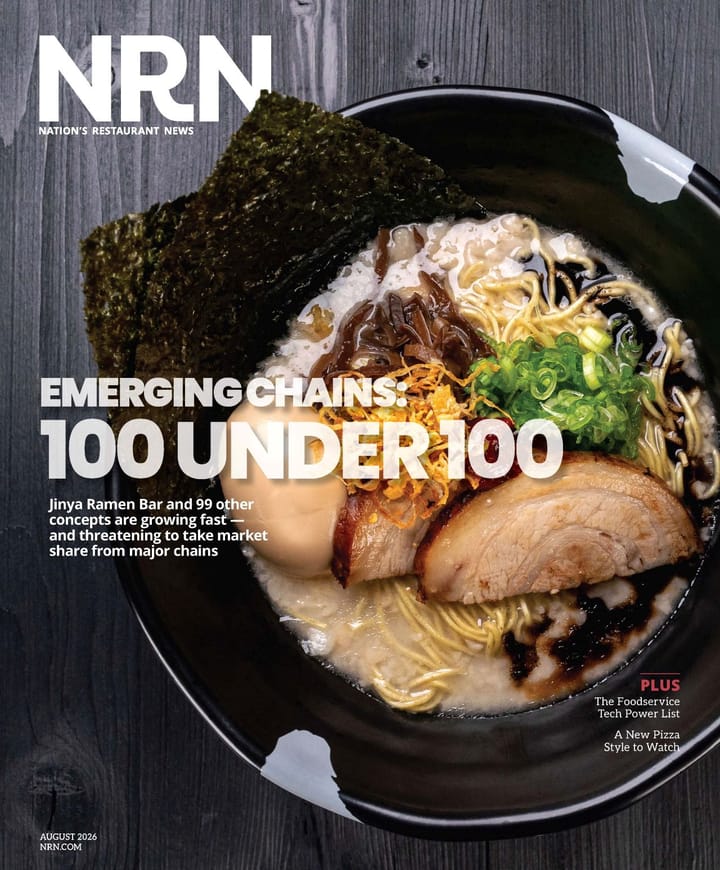
Nation's Restaurant News identified 100 emerging restaurant concepts with sub-100-unit footprints that achieved growth in the past year.
The MAHA movement is advancing a proposed FDA rule to regulate foods labeled as Generally Recognized as Safe, signaling a potential shift in how food safety standards are enforced in the industry.

A new Qu report tracks how quick-service and fast casual restaurants are moving beyond testing digital tools toward operational deployment.
Restaurant operators are finding measurable returns from AI implementations, with integration into existing systems rather than standalone tools emerging as a success factor, according to the IFBTA's
Daily tip payout systems are gaining adoption in restaurants, offering staff faster access to earnings and greater financial visibility.
Square and OpenTable expanded their partnership to integrate restaurant payments with guest data management, signaling movement toward unified point-of-sale and reservation platforms.
Protein-enriched products are becoming mainstream across grocery and restaurant categories, signaling a shift in consumer expectations that restaurant operators may need to address through menu innova
HeyGuest has launched a voice AI ordering system amid industry data showing 43% of hospitality calls go unanswered, suggesting restaurants are exploring automation to address gaps in phone service cap
A lender has filed suit against a Philadelphia franchisee to force the sale of 41 restaurants to recover an $18 million debt, signaling financial stress among franchise operators managing multi-unit p
Restaurant chains are running Labor Day promotions tied to Grubhub delivery.
An e-commerce risk expert has identified fraud as a significant vulnerability in restaurant loyalty programs.
Restaurants are exploring Gen X and Baby Boomer hiring as a potential response to labor turnover, signaling a shift toward older demographics who may bring different workforce characteristics than you
QSR Magazine reports that value incentives are undermining restaurant loyalty programs, suggesting operators may need to reconsider how discounts and deals interact with program retention strategies.
The source asserts that localized franchising is key to Asia's QSR race, though the snippet does not provide supporting details, examples, or evidence.
California regulators fined Dickey's Barbecue Pit $36,800 for franchise disclosure violations, signaling continued enforcement scrutiny of franchisor compliance with state registration requirements.
Stifel projects Happy Belly could operate 183 restaurants by 2027, signaling analyst confidence in the brand's expansion trajectory.
AI-powered CCTV analytics can convert existing restaurant cameras into tools for operational monitoring.
Block is expanding Square's presence in the restaurant sector, though the source does not provide specifics on the expansion strategy or growth trajectory.
Pan American Group disclosed a data breach following detection of suspicious network activity.
Kalkine Media poses a question about whether Restaurant Brands International can maintain growth trajectory across its global operations.
Twisted Egg Shack signed a 60-unit franchise agreement with 1836 Brands to expand across Texas, signaling confidence in franchise-led growth within the regional breakfast-concept market.
Sauce has launched a mobile restaurant management platform, responding to operators' demand for greater control over their digital operations.
Restaurant sales grew in July, with Yahoo Finance highlighting five stock tickers as having growth potential amid increased consumer spending.
Deliverect and Bounteous have partnered to expand first-party digital ordering capabilities for restaurant brands.
Operators should use slower seasons to assess operational needs and distinguish between profitability and cash flow management, according to industry guidance.
Restaurant Brands International trades at fair value by DCF analysis despite a 49.1% five-year total return, though market multiples suggest some upside potential; the stock faces headwinds from cold-
Spur Corp's flagship Spur brand drove strong sales in South Africa, while its John Dory's subsidiary struggled, signaling divergent performance across the company's portfolio.
Jollibee's long-standing leadership team represents institutional stability that the article suggests franchisees may undervalue when evaluating the brand.
Restaurant Dive argues that loyalty programs should move beyond traditional points-based models, suggesting operators may need to rethink engagement strategies to remain competitive.
Restaurants are adopting direct delivery apps as an alternative to third-party platforms, signaling a shift toward capturing margin and customer insights that commission-based services limit.