Nation's Restaurant News
Papa Johns, Dunkin’, Chick-fil-A
Podcast episode announcement with no detail on topics or guests — insufficient information to assess relevance to operators.
192 stories · last 7 days by relevance
Podcast episode announcement with no detail on topics or guests — insufficient information to assess relevance to operators.
Management-coaching framework on decision-making and accountability applies broadly to restaurant operations but lacks case studies or chain-specific examples.
Jargon explainer about tech terminology — generic martech content with no specific restaurant business application.

Generic SMS tool roundup lacking restaurant-specific strategy or brand case studies — vendor-style listicle with minimal operator insight.
Stock-picking analysis with no operational insight — not actionable for brand marketers or executives.
Nutrition-focused franchise model emphasizes recurring membership and coaching rather than kitchen operations—relevant for franchisors exploring recurring-revenue models.

Award recognition for TabSense's AI platform — validates restaurant tech as competitive differentiator, though no details on adoption or impact provided.
General influencer marketing advice for food brands — not specific to restaurant chain operations or strategy.
Collectible drinkware merges loyalty/engagement with sustainability — a tactic more common in sports/entertainment than QSR, limited signal for broader multi-location strategy.
UK pub chain closures are a regional real-estate issue, not a multi-location US operator concern.
Vendor-published loyalty ROI data claims high returns, but lacks named restaurant customer case studies or implementation specifics.
Seasonal menu refresh with LTO cocktails and Build Your Own Mimosa — tactical promotion without chain-level strategy or performance data.

Consumer listicle of new menu items — no strategic insight into LTO planning, execution, or performance across chains.
Topgolf arcade partnership expands venue experience but is ancillary entertainment, not core to multi-location restaurant operator strategy.

Holiday promotional roundup with no operator-level insight into strategy, economics, or competitive positioning.
A ranked list of tech vendors — useful for benchmarking martech awareness, but no operator strategy or product news.
Generic menu item roundup from unspecified restaurants — no chain strategy or trend signal.

Broad AI profitability claim with no specific use case, brand example, or methodology — vendor content marketing.
Local community reaction to international chains — relevant only if it signals broader real-estate or brand-expansion strategy; story appears to be neighborhood-focused coverage.
Sysco is a supplier, not a restaurant operator; regulatory scrutiny of this deal affects food costs and supply chain but isn't core to brand-side marketing/loyalty strategy.
Vendor content on tier-program UX best practices — useful reference for loyalty designers, but no news about brand deployments or competitive shifts.
A single-chain distress story with no broader operator insight — notable only as a cautionary tale, not a trend.
Vendor content marketing on share-of-wallet and frequency strategy — generic framework with no restaurant brand case study or product announcement.

Industry conference promotional post with no operational, product, or business-strategy substance relevant to multi-location operators.
Topgolf adding entertainment amenities — non-core to restaurant operators' core loyalty and revenue levers.

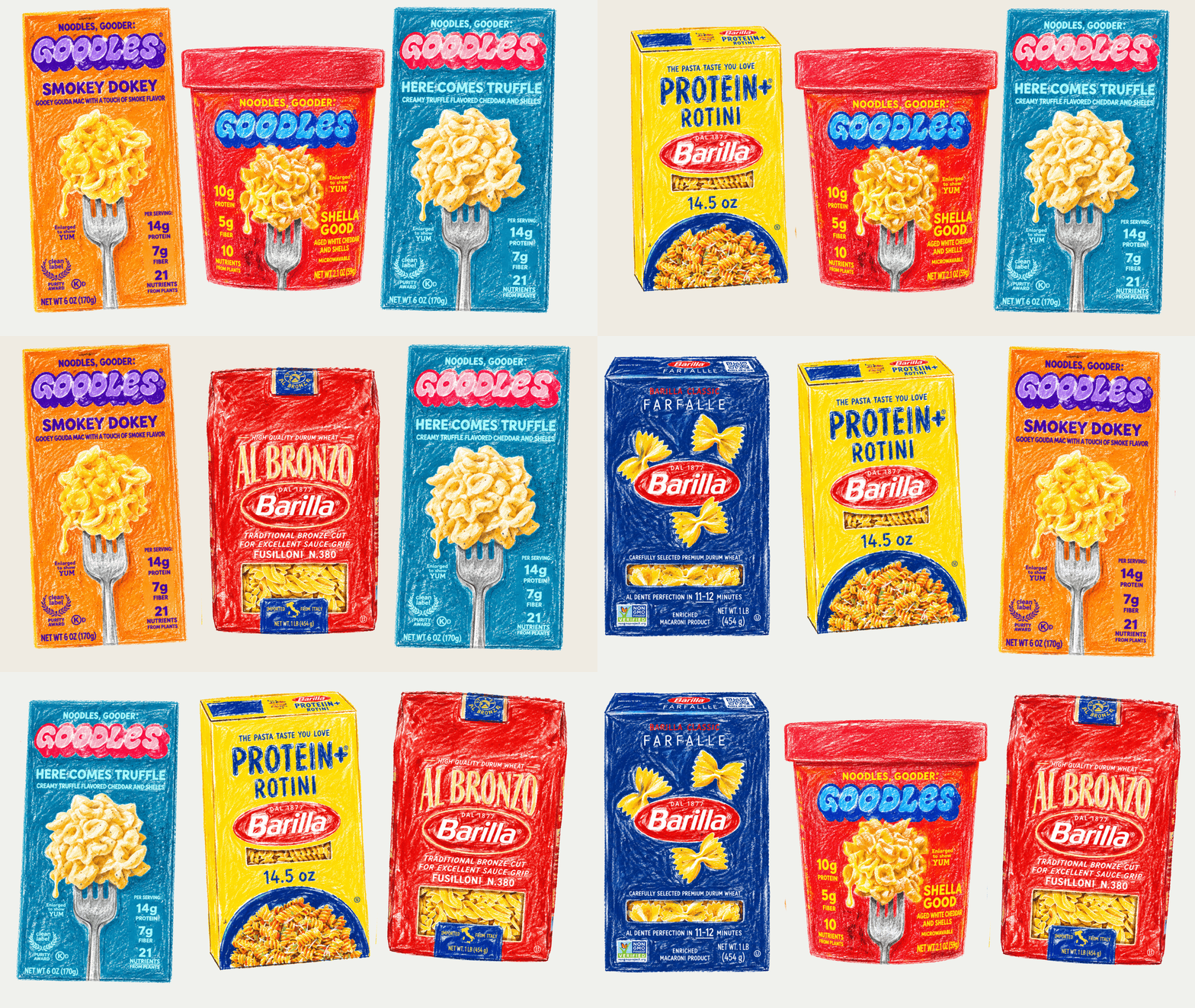
CPG acquisition story (Barilla/Goodles) — not restaurant-industry relevant; audience cares about chain M&A, not packaged-goods manufacturing deals.
Single new restaurant opening in NYC — no signal for multi-location chain strategy or operations.

Digital signage vendor announcement with no disclosed brand name, operator financials, or chain strategy detail — insufficient for multi-location brand operators.
Local real-estate announcement for one unnamed chain — no chain-wide or multi-location operator signal.
Mars (a CPG/food manufacturer, not a restaurant chain) using Google Cloud — no direct relevance to multi-location restaurant brand operators.
Vendor marketing for a seafood supplier product — not a chain strategy or multi-location operator initiative.
Consumer-facing promotional listicle with no operator insight into loyalty program mechanics, effectiveness, or multi-location deployment strategy.
International chain's U.S. entry is a consumer story, not an operator playbook — no insight into loyalty, martech, or multi-location strategy.
Single-brand franchising announcement from a regional Australian group — limited relevance to U.S. multi-location operators.
Fine-dining holding company profile — no concrete business news, strategy shifts, or lessons for QSR/fast-casual operators.

One co-branded unit opening in a single market—no evidence of chain-wide expansion strategy or operator takeaway.
Cause-marketing campaign at single-location group properties — routine CSR activation without operator takeaway.
New menu item debut at an unnamed Mexican chain—insufficient detail and no clear operator takeaway.
Generic influencer marketing strategy piece with no restaurant brand angle or martech application to multi-location operators.
Single international brand's first U.S. location opening — not a signal for multi-location operator strategy or industry trends.
Single-brand closure in one metro — local news without signal for multi-location chain strategy.
Headline without specifics — no actionable data for multi-location operators without knowing the brand, reason, or scope.