Yahoo Finance
Stronger Burger King Goes After McDonald’s
Burger King traffic shift overtaking Wendy's signals QSR competitive realignment — watch for menu, loyalty, or pricing strategies driving the move.
2,410 stories · last 30 days by relevance
Burger King traffic shift overtaking Wendy's signals QSR competitive realignment — watch for menu, loyalty, or pricing strategies driving the move.
Moe's Southwest Grill is closing additional locations following a franchise bankruptcy.
Korea's VIG is selling the Bonchon fried chicken chain to Thailand-based Minor for $141 million, signaling continued consolidation in the Asian quick-service restaurant sector as regional operators pu
StockStory posed a buy/sell/hold question about McDonald's following its Q2 earnings report.
Farmer Boys is discounting its Big Cheese cheeseburger to $3.99 for rewards members on National Cheeseburger Day, a promotional move that signals chains are using calendar-driven occasions to drive lo

Loyalty programs are increasingly serving as data collection tools rather than purely transactional offers, enabling restaurants to build first-party customer insights.
Starbucks is discontinuing a blending powder after baristas reported respiratory issues from airborne particles, aligning the change with its seasonal menu shift.
Pfizer and Starbucks both raised their outlooks this summer, but their recovery trajectories differ in sustainability and investor relevance.
Starbucks is facing pressure from pro-labor investors seeking to separate board chair and CEO roles while workers' union seeks consumer boycott support over contract negotiations.
Krispy Kreme is pursuing international growth through franchising rather than company-owned operations, minimizing its own capital expenditure.
Immigration enforcement is increasingly targeting restaurants.
Dutch Bros and 7 Brew are competing to acquire Salad and Go's real estate portfolio through a court-supervised auction as the drive-thru chain's parent navigates bankruptcy.
Trian has no immediate plans to bid for Wendy's, according to sources familiar with the matter.
Red Lobster has experienced increased foot traffic tied to its limited-time offers and "newstalgic" menu refresh, signaling that nostalgia-driven promotions may be driving near-term traffic recovery f
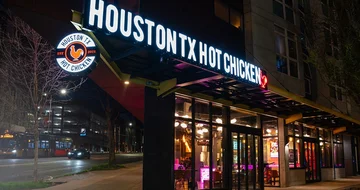
Franchise development hire signals scaling ambitions — Houston TX Hot Chicken's talent recruitment from established chains (Jimmy John's, GoTo Foods) indicates real growth infrastructure building.
Starbucks is cutting 224 jobs—104 in store design and construction, and 120 Seattle employees who declined relocation to Nashville—as part of a broader cost-reduction effort.
Bloomin' Brands reported Q2 earnings as part of a broader sit-down dining sector review.
Burger King revamped its Whopper, and the chain has overtaken Wendy's.
Activist investor Starboard Value has taken a stake in Shake Shack and is pushing the chain to accelerate US franchising following a mixed Q2 earnings report, a move that signals potential strategic r
A Wendy's insider sold shares to cover taxes on vesting restricted stock units, reducing their direct equity stake by 13% while retaining a significant position.
US fast-food traffic declined in July, with chicken and pizza concepts showing particular weakness.
Wingstop appointed PENN Entertainment's CEO Jay Snowden as an independent director in August 2026, expanding its board to eleven members; the move signals potential strategic refresh or governance cha
McDonald's price targets range from the $280s to $300s, with analyst disagreements centered on near-term U.S. same-store sales execution.
Firehouse Subs reached 1,500 locations with a new restaurant opening in Abilene, Texas, marking a milestone in the brand's U.S. expansion.
El Pollo Loco is executing its turnaround plan faster than the originally projected three-year timeline.
CAVA Group reported 31.3% Q2 sales growth, though the short-seller James Chanos questioned the company's same-store sales guidance—signaling investor confidence in topline momentum even amid skepticis
Sysco's CEO expressed confidence that the company's Restaurant Depot acquisition will receive regulatory approval.
Topgolf's technology leadership is investing in integrated systems across gameplay, food, beverage, and events—signaling how entertainment-hospitality hybrids are prioritizing tech infrastructure to m
inKind raised $414 million in a second financing round, bringing total capital raised to over $1.2 billion for its restaurant commerce platform.
Wing Snob, a fast-casual chicken wing chain using never-frozen chicken, plans to open seven locations in the greater Indianapolis area through Indiana-based operator JHN Group.
September's National Food Safety Education Month highlights food safety as a core operational concern, with food safety and quality standards ranking among top challenges for a significant share of re
Fractured Prune Doughnuts is launching a new franchise expansion after 50 years built on made-to-order doughnuts fried at point of sale, signaling confidence that the fresh-product differentiation mod

Over half of Americans support rounding up purchases for charity, signaling potential for QSRs to mobilize customer bases for fundraising tied to education, hunger, and disaster relief causes.

A restaurant's reservation system captures customer data from busy service nights, creating a record of guest information.
Industry experts are examining the potential federal definition of ultra-processed foods and its implications for restaurant operators, signaling possible regulatory shifts ahead.
Panda Express has built a $7 billion restaurant business while remaining privately held, suggesting that scale and profitability can be achieved outside of public markets or strategic sales.
Twin Peaks has signed an area development agreement with an InnJoy Hospitality affiliate to expand its sports lodge concept into South Texas counties including Brownsville, South Padre Island, and Lar

The Flying Biscuit Café, an Atlanta-based all-day breakfast and brunch brand, has signed a franchise agreement with Mario and Ifeoma Harper to open its first location in Katy, Texas.
The Food Institute examines the difference between attracting recommendations (AEO) and converting them into loyalty (GEO), suggesting the distinction is gaining importance for restaurant and food bus
Mr Gatti's is targeting Lubbock, Texas for expansion.
FDA's shift to mandatory GRAS review and ultra-processed food definition will reshape ingredient sourcing and compliance burden for multi-location chains; NYC delivery labor organizing signals regulat
Pizza Hut's global CEO Aaron Powell announced his departure as the brand's sale to LongRange Capital nears completion in late August, signaling potential leadership transition and strategy shifts unde
India has closed multiple Domino's and Pizza Hut locations due to hygiene violations.

Chick-fil-A is introducing chicken & waffles sandwiches alongside s'mores-flavored items for a limited fall run, signaling continued menu experimentation to capture daypart occasions beyond its core b
Cava Group's sales growth is expected to continue as new restaurants outperform and same-store sales recover from a Cyclospora outbreak impact, according to RBC's analysis.
Women's Foodservice Forum partnered with Culture Partners to offer an accountability framework to its membership starting in October, signaling growing industry focus on structured diversity and workp

Domino's has introduced an individual-sized pizza carrying its namesake brand.
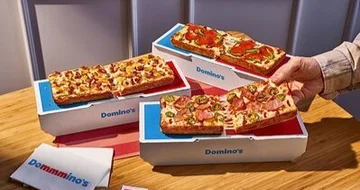
Domino's is launching a new Detroit-style personal pizza called 'the Domino' nationwide on August 31, marking the chain's first product to bear its own name.

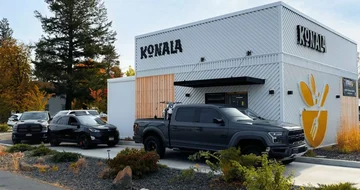
Health-focused fast casual brands Konala and Clean Eatz are emphasizing drive-thru and grab-and-go formats to compete on convenience with traditional fast food.